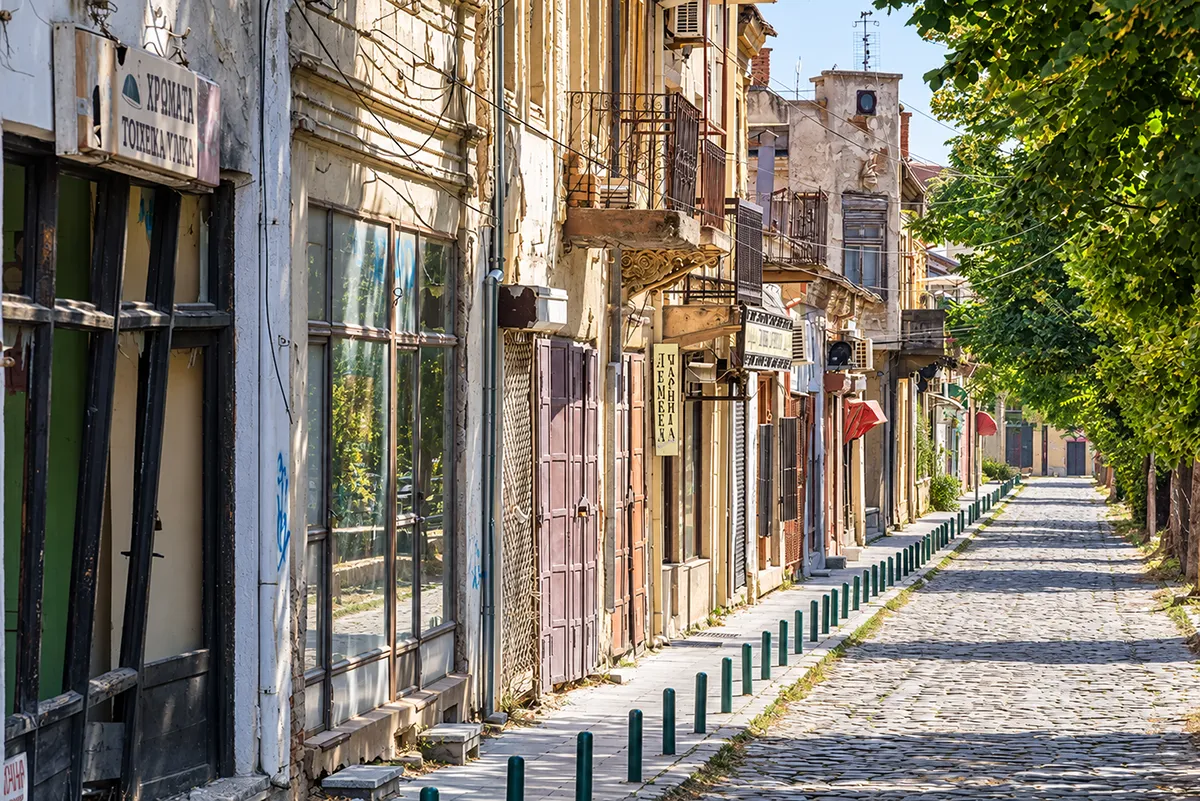
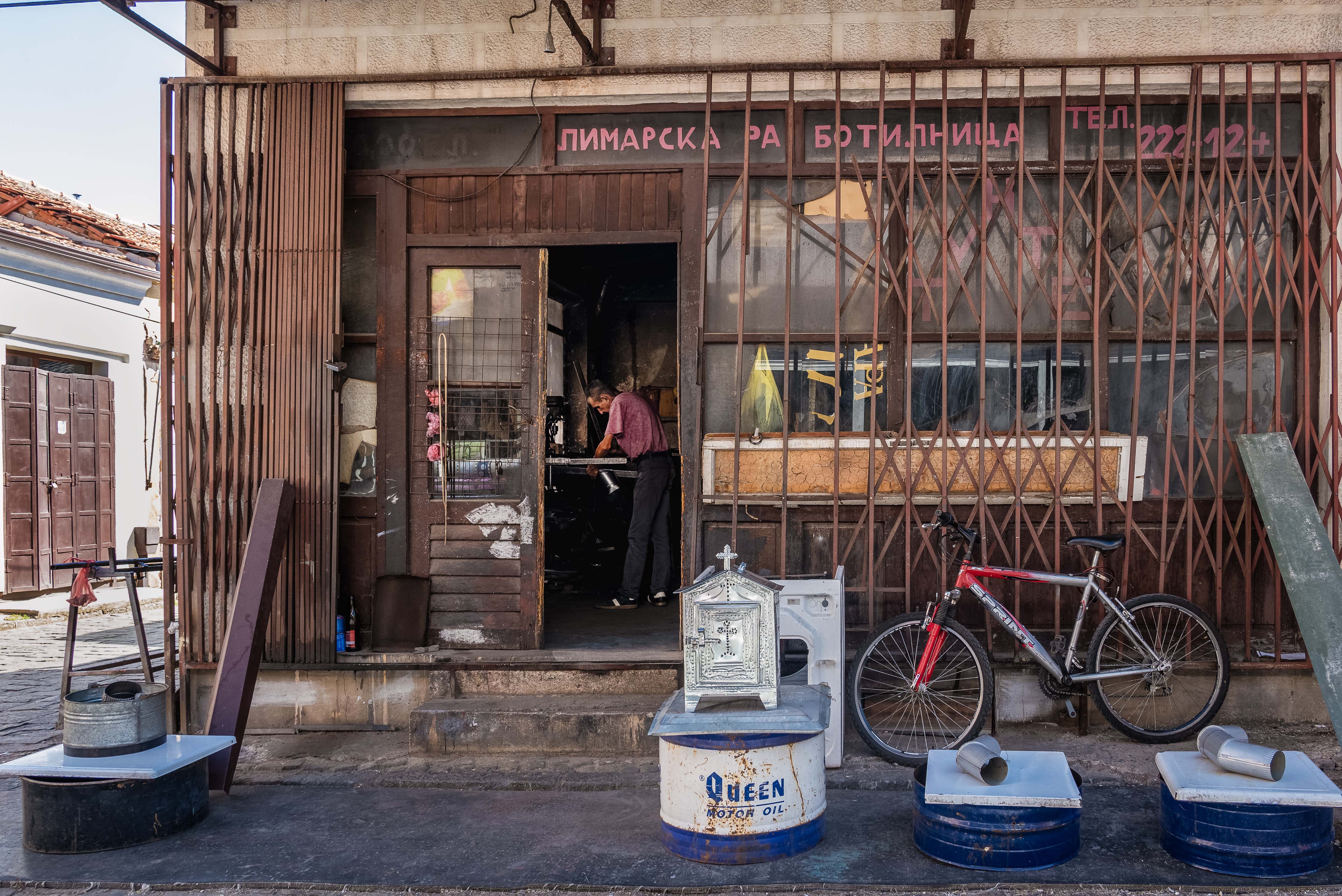
In the Old Bazaar of Bitola and its immediate surroundings stand significant religious and historical monuments that bear witness to the city's rich historical and cultural heritage. The Clock Tower, the Bezisten, Yeni Mosque, Isak Mosque, Haydar Kadi Mosque, Hadzi Mahmud Bey Mosque and the Deboj Hammam are recognizable landmarks of the city and reminders of its commercial, religious and cultural role through the centuries. Together with the bazaar, these monuments shape the historic core of Bitola, a place with an authentic spirit that delights visitors from all over the world.
1. Clock Tower
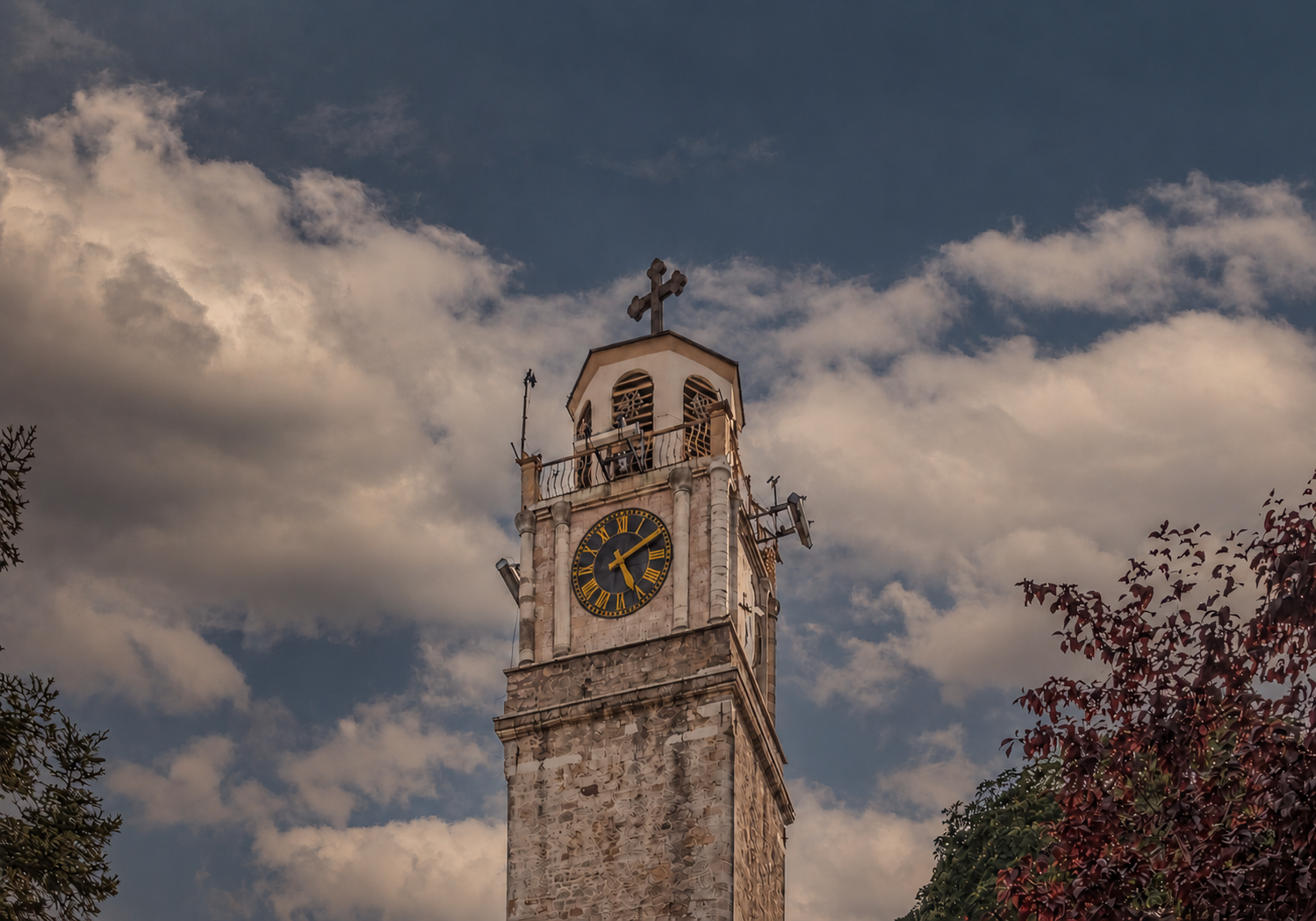
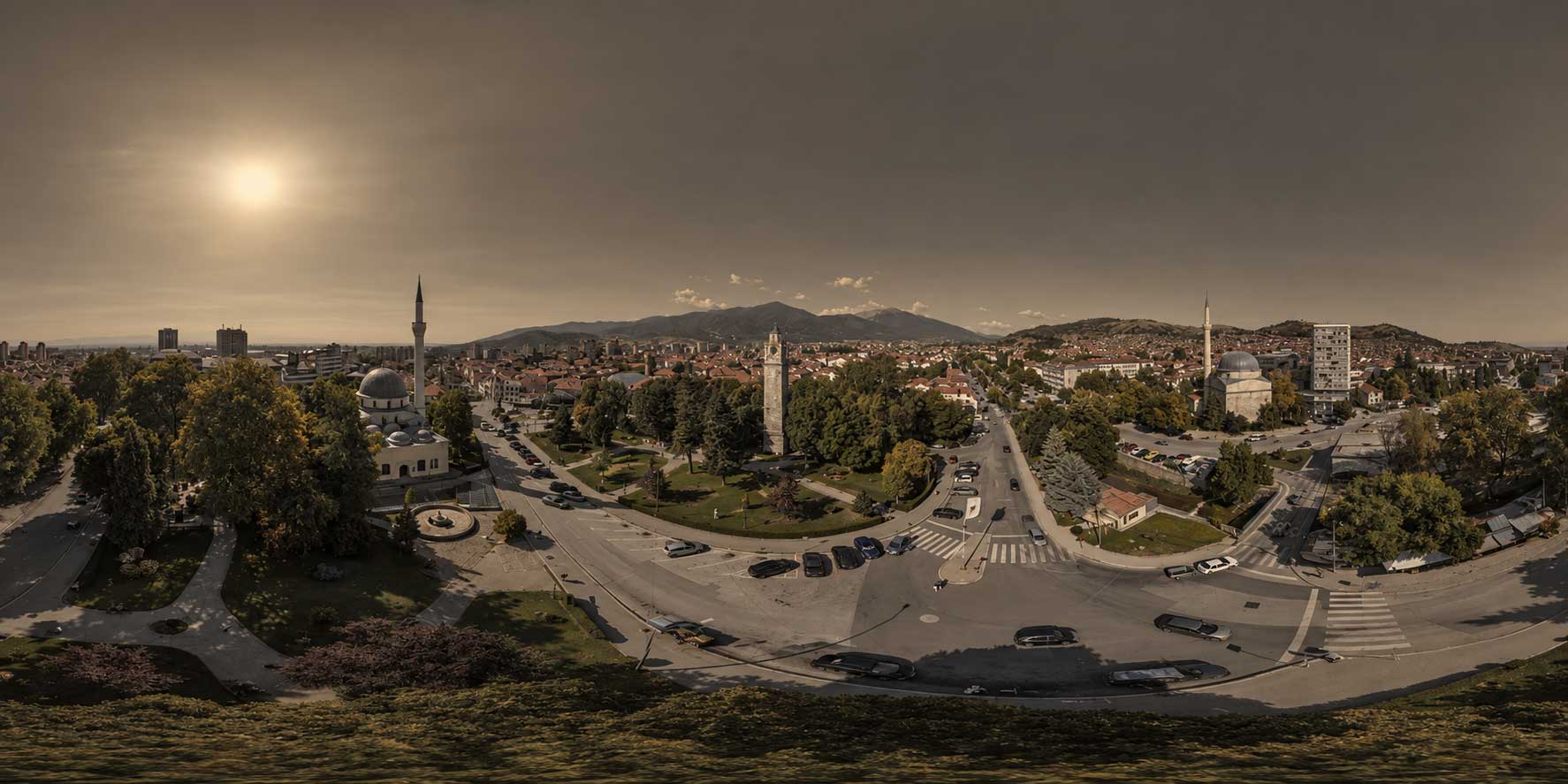
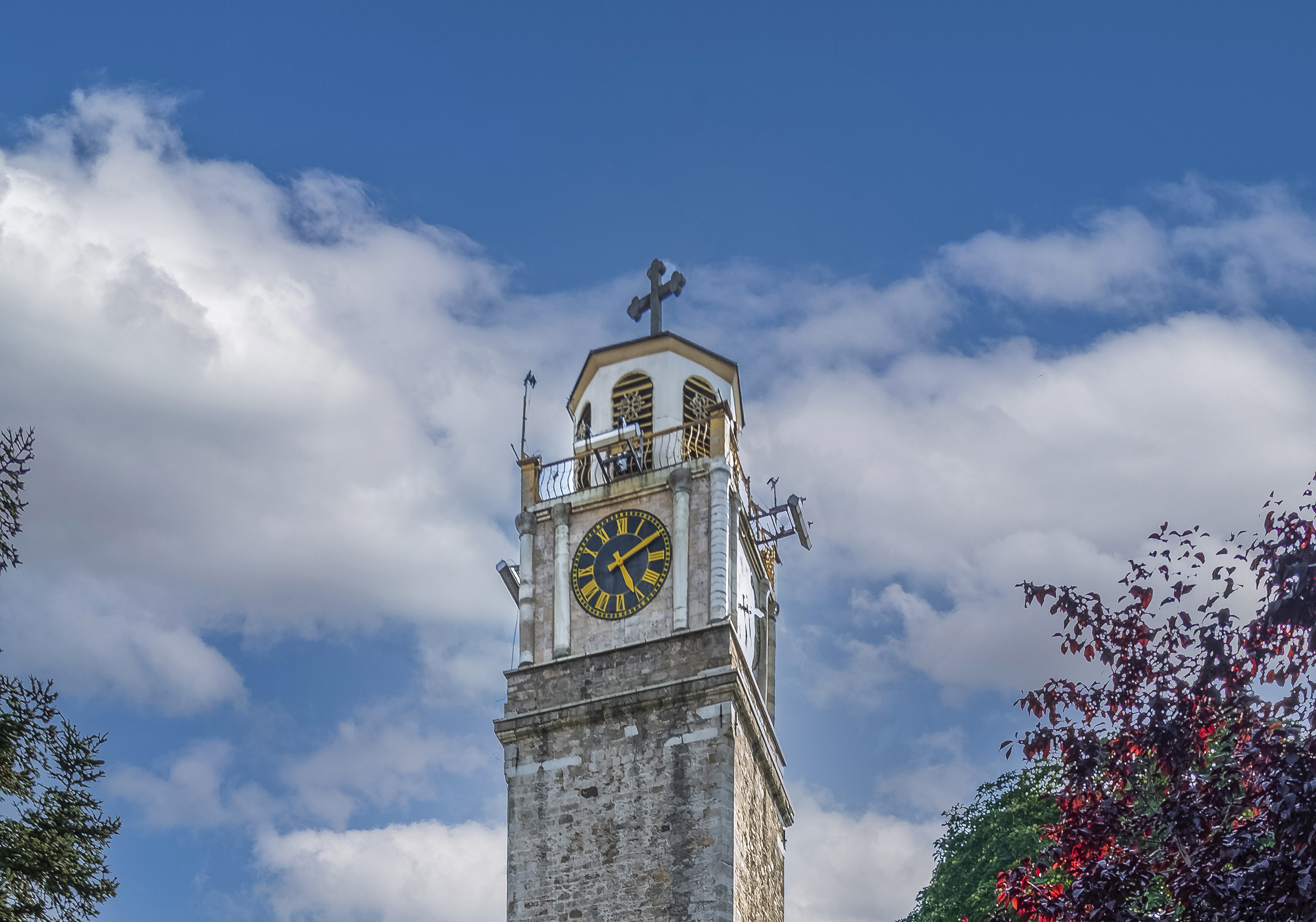
The Clock Tower is one of Bitola’s most recognizable landmarks. It rises in the City Park, in the very center of the city, between the Church of St. Demetrius and the Yeni Mosque, on the site where the former Pekmez Market once stood.
History
The exact year of its construction is unknown. A clock tower in Bitola was mentioned as early as 1664, although it is uncertain whether this refers to the present structure. The current tower is believed to have been built around 1830, at approximately the same time as the Church of St. Demetrius.
According to a local legend, the Ottoman authorities collected around 60,000 eggs from the surrounding villages and mixed them into the mortar used for its construction. Perhaps that is why, as the people of Bitola like to say, its walls remain strong to this day.
Architecture
The tower is approximately 32 metres high and has a square base measuring 5.8 metres on each side. The entrance is located on the northern side, and an internal spiral staircase leads to the top. The upper section features terraces with wrought-iron railings and lighting, making both the tower and its clock visible at night. The clock itself is located on the highest of the tower’s three levels.
The Clock
Until 1912, time was measured according to the Ottoman system, based on sunset. The first clock face and mechanism, manufactured by a German company, were installed in 1927. In 1936, Germany donated a new and more accurate clock as a gesture of gratitude for the German military cemetery from the First World War in Bitola. Fifteen bells were also installed at that time.
The mechanism was renovated in 1962, and in 1970 a keyboard was added, allowing melodies to be played from the tower.
The last major restoration took place in 2009, when the roof was covered with copper and the clock mechanism was replaced. Following this renovation, the song “Tamu le majko, blizu Bitola”, dedicated to Taki Daskalo, was no longer played. Today, the Clock Tower chimes the melody “Bitola moj roden kraj” (“Bitola, My Hometown”).
2. Bezisten
Built in the late 15th century, the Bezisten is a massive stone building that served for centuries as a covered market and the center of economic life in Ottoman Bitola.
It was built by the vizier Kara Daut Pasha. With its thick stone and brick walls and vaulted brick arches, the building looks almost like a fortress, which makes sense, since it was designed to keep valuable goods safe.
At first, the Bezisten was a place for trading fine fabrics, textiles and embroidery. It was also where the belongings of people who died without heirs were kept: money, jewelry, weapons, manuscripts, writing sets and smoking accessories. All of these became the property of the state.
The tax revenues of the Bitola Vilayet were also stored here, locked in safes in the basement behind iron gates, until they were sent on to the imperial treasury.
In 1667, while the Ottoman traveler Evliya Çelebi was visiting the city, the market was robbed. After that, night guards were hired, and walking through the Bezisten after dark without a lantern was forbidden.
The building has been renovated several times. It got most of its present look in the 20th century, when four entrances in neo-baroque style were added. Historical records say the Bezisten once had three inner streets and 84 shops.
Throughout the 20th century it kept working as a market. Textiles were sold here first, and later meat, fruit and vegetables. In the 1980s it was turned into a shopping center, but its historic appearance was kept.
Today, the Bezisten is an important reminder of Bitola's long history as a trading town. For centuries it was at the heart of the city's commerce and everyday life, and its original architecture still carries the feel of those times.
3. Haydar Kadi Mosque
Located on the left bank of the Dragor River, near Deboj and the site of the former Sheep Market, the Haydar Kadi Mosque is one of the most valuable examples of Ottoman architecture in Bitola.
The mosque was built in 1561–1563. Its construction was financed by Haydar Kadi, who served as a kadi, or judge, in Bitola at the time. According to some sources, the design is attributed to Mimar Sinan, the most renowned architect of the Ottoman Empire.
In the 17th century, the mosque was visited by the Ottoman traveller Evliya Çelebi, who described it as one of the most beautifully decorated mosques of its time. According to some sources, it was also the only mosque in Bitola to have two minarets.
The mosque was renovated in 1890. Prior to the visit of Sultan Mehmed V Reşad to Bitola in 1911, numerous buildings in the city were restored, including all of its mosques. Following the Balkan Wars, the Haydar Kadi Mosque ceased to function as a place of worship and deteriorated for decades.
A comprehensive restoration began in 2012, financed by the Republic of Türkiye, restoring the building to its former appearance.
4. Yeni Mosque
With its monumental dome and tall minaret, the Yeni Mosque dominates the central part of Bitola, opposite the Clock Tower. This remarkable example of Ottoman architecture was built in 1558 by Mahmud Efendi, the kadi of Bitola.
The mosque features a square ground plan, a 19-metre-high dome, and a 39-metre-high minaret. Its interior was once richly decorated with elaborate stalactite ornamentation and calligraphy created by craftsmen from Constantinople.
Archaeological excavations revealed the foundations of three earlier Christian churches beneath the mosque, the oldest dating from the 7th century. Today, the Yeni Mosque serves as an art gallery.
5. Isak Mosque
On the left bank of the Dragor River stands the Isak Mosque, the oldest surviving mosque in Bitola. It was built in 1508–1509 as an endowment of the kadi (judge) Ishak Çelebi, who also built a madrasa, a mekteb (primary school), shops and watermills in the town. The mosque has a square base, a dome reaching 26 meters and a 45-meter minaret. The interior is decorated with painted and stucco ornamentation. Unlike the Yeni Mosque, which served as a place of daily prayer, the Isak Mosque was a place of spiritual retreat, devoted to the interpretation of the Qur'an. Next to it lies the tomb of Ishak Çelebi, who was buried here in 1512.
6. Hadzi Mahmud Bey Mosque
In the heart of Bitola's Old Bazaar stands the Hadzi Mahmud Bey Mosque, built in 1521/22 by the city's governor at the time, Hadji Mahmud Bey. It is recognisable by the unusual construction of its dome and the decorative masonry of its façade, adorned with reliefs bearing religious symbols. According to tradition, it was a gathering place for learned men and a centre for the interpretation of religious texts and Sufi thought. Some of its students later became prominent figures in Istanbul. The mosque bears witness to the spirit of coexistence for which Bitola is still known today.
7. Deboj Hammam
Next to the old Bitola Bazaar stands Deboj, one of the most striking Ottoman bathhouses in Bitola. It once lay at the heart of the bazaar, but after much of the bazaar was destroyed, the hammam was left on its edge.
There are no precise records of who built it or when. The Bitola court registers (sijills) from the XV century to 1912 mention around ten bathhouses, but the locations of most of them are unknown. Deboj may be the Eski or Atik Hammam, the "Old Bath", built by Sungur Chaush Bey. If so, it dates from the 15th century. Its monumental scale and rich decoration link it to the golden age of Ottoman architecture in the late XV and XVI centuries. The name Deboj, meaning "storehouse", was given to it later.
Deboj is a çifte hammam, a double bath with separate sections for women and men, divided by a wall. The women's section is larger and more richly decorated. It has a large domed hall with a fountain (şadırvan) used as a changing room, rooms for resting, massage and hair removal, and a halvet for bathing. The men's section is smaller and simpler.
The hammam was built of alternating courses of stone and brick, bound with moisture-resistant hydraulic mortar. It was heated by a hypocaust system, in which hot air circulated beneath the floors and through the walls. The interior is decorated with muqarnas (stalactite) ornaments, stucco reliefs with floral and geometric motifs, and domes pierced with star-shaped openings that let in daylight.
During the 1967 restoration, remains of the water cistern and the furnace were discovered; neither survives today. At that time, the Turkish clay-tile roof was replaced with galvanised sheet metal, bringing the undulating "fifth façade" of domes into full view.
Sources: Bitola Top Destinations – Bitola Tourist Guide (2024), Wikipedia, Bitolska Memorija, Bitola.info, Bezisten – Covered Market, https://www.bitolatourguide.com, Haydar – Kadi Mosque – Bitola (https://marh.mk)